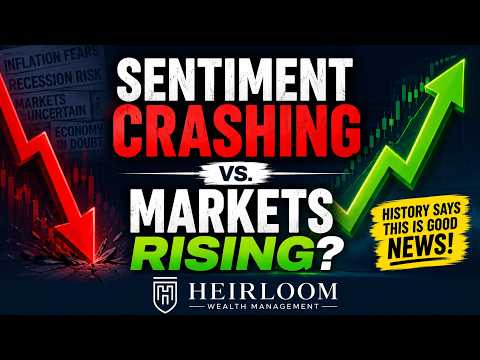
The Economy Isn’t as Broken as Headlines Suggest
The Job Market Is Still Functioning
Consumers Are Still Spending
Corporate Earnings Remain Resilient
Inflation Has Cooled, Even If Prices Haven’t Fallen
Household Balance Sheets Are Stronger Than You Think
Why Everything Feels Worse Than It Is
What This Means for Leaders and Investors
It’s easy to feel like the economy is constantly on the brink. Rising interest rates, geopolitical tension, housing affordability, and nonstop negative headlines create a sense that things are falling apart. But when you step back and look at the data instead of the noise, a very different picture starts to emerge.
For business owners, consultants, and agency leaders, perspective matters. Decisions driven by fear often lead to missed opportunities, poor timing, or unnecessary risk aversion.
Despite common complaints about hiring challenges or job dissatisfaction, unemployment remains relatively low by historical standards. In practical terms, that means people who want to work can generally find work.
A tight labor market isn’t a sign of economic collapse. In many cases, it reflects continued demand for talent and ongoing economic activity, even if the experience feels uneven across industries.
One of the biggest disconnects in today’s economy is between what people say and what they do. Surveys show pessimism, but spending data tells a different story.
Consumer spending continues to drive the majority of economic activity, particularly in discretionary categories like travel, dining, and entertainment. When people are truly fearful, they stop spending. That simply hasn’t happened at scale.
Corporate profitability has steadily increased over the past several years. A large percentage of companies continue to meet or exceed earnings expectations, even in an environment many describe as “difficult.”
This matters because long-term economic health is closely tied to business performance. Strong earnings indicate adaptability, pricing power, and demand—all signals of resilience rather than distress.
Prices may still feel high, but inflation has come down significantly from recent peaks. That distinction is important.
Lower inflation doesn’t mean things get cheaper overnight. It means prices are rising more slowly, which helps stabilize purchasing power and planning. Historically, inflation levels tend to move within a long-term range, and current data suggests a return toward that norm.
When assessing financial health, net worth matters more than headlines. Household net worth—assets minus liabilities—remains near all-time highs.
Unlike prior economic downturns driven by excessive leverage, today’s environment shows comparatively healthier balance sheets across households and corporations. That reduces systemic risk and increases resilience.
The gap between perception and reality often comes down to negativity bias. Humans are wired to focus more intensely on negative information than positive information.
Media incentives amplify this effect. Negative stories capture attention, even when they don’t represent the full picture. Over time, this skews expectations and decision-making—especially for investors and business leaders.
This is where disciplined thinking and structured education become critical. Resources likeongoing financial education and economic contexthelp decision-makers separate signal from noise and stay aligned with long-term objectives.
No economy is without risk. Downturns will happen, and uncertainty is unavoidable. But reacting emotionally to pessimistic narratives can be more damaging than the risks themselves.
The most effective strategy is not prediction—it’s preparation. A diversified approach, clear planning framework, and long-term perspective allow you to navigate volatility without abandoning opportunity.
The economy may not be perfect. But it’s far from the disaster it’s often portrayed to be.
Related Services